
Quick answer: During perimenopause and menopause, declining estrogen reduces collagen, oil, and moisture in your skin—leading to dryness, thinning, wrinkles, and sometimes breakouts. Women can lose up to 30% of their collagen in the first five years after menopause. The right skincare helps, but persistent or severe changes may signal a deeper hormonal imbalance worth investigating.
Your skin has a story to tell, and during perimenopause and menopause, that story changes fast. Maybe your once-oily skin now feels tight and papery. Maybe you’re breaking out along your jawline like a teenager, or noticing your cheeks lose the plumpness you took for granted. These shifts can feel confusing and even a little unsettling.
At Kaufman Health and Hormone Center, our team of functional medicine providers sees your skin differently than most. It’s not just a surface to treat—it’s a window into what your hormones are doing beneath the surface. When estrogen fluctuates and declines, the effects ripple through your entire body, and your skin is often one of the first places you’ll notice.
This guide answers the questions we hear most often from patients navigating these changes. Our goal is to help you understand what’s happening, what genuinely helps, and when your skin might be telling you something that deserves a closer look.
Why is my skin suddenly dry in perimenopause?
Estrogen keeps your skin hydrated by supporting the cells that produce collagen, elastin, and hyaluronic acid—the substances responsible for holding moisture. As estrogen begins to fluctuate and decline in perimenopause, your skin produces less of these hydrating compounds.
The result? Skin that feels drier, tighter, and more prone to flaking than it used to. Estrogen also influences your skin’s natural oil production, so even women who battled oily skin for decades may suddenly find themselves reaching for heavier moisturizers.
This dryness isn’t just cosmetic. A weaker moisture barrier means your skin becomes more sensitive, more reactive, and slower to heal. Understanding the hormonal root of the problem is the first step toward addressing it properly rather than chasing symptoms.
Does menopause cause wrinkles, thinning skin, or breakouts?
Yes—and often all three at once. Here’s why each happens:
- Wrinkles and fine lines: As collagen and elastin decline, skin loses its ability to bounce back, so lines settle in and become more visible.
- Thinning skin: Less collagen means less structural support. Skin becomes more fragile, bruises more easily, and vessel walls rupture from even minor pressure.
- Breakouts: Falling estrogen shifts your hormonal balance, allowing androgens to have a relatively stronger effect. This can trigger stubborn breakouts along the chin and jawline—often surprising women who haven’t had acne since adolescence.
Many patients tell us it feels like their skin changed overnight. That perception is real. The first few years after menopause bring some of the most rapid changes because estrogen is at its lowest point during this window.
Can estrogen loss affect collagen and skin firmness?
Absolutely, and the numbers are striking. Research shows women can lose up to 30% of their skin’s collagen in the first five years after menopause, with much of that loss concentrated in the face. After that initial drop, collagen continues to decline by roughly 2% each year.
Estrogen directly maintains collagen production. When estrogen falls, so does your body’s ability to make and preserve this essential protein. Combined with the natural loss of facial fat pads and structural changes in bone, this is why so many women notice sagging in the cheeks, jawline, and neck.
The cheeks are especially vulnerable because their structure depends on underlying support from bone and collagen—both of which weaken over time. Recognizing collagen loss as a hormonal issue, not just an aging one, opens the door to more targeted solutions.
What skincare ingredients help during menopause?
A thoughtful skincare routine can meaningfully support your skin through this transition. From a clinical standpoint, these ingredients have the strongest track record:
- Hyaluronic acid: Attracts and holds water, helping skin appear plumper and more hydrated.
- Vitamin C (L-ascorbic acid or THD): Protects against free radical damage and supports collagen production while brightening the complexion.
- Retinoids: Accelerate cell turnover, stimulate collagen, and soften fine lines over time.
- Peptides and growth factors: Signal skin cells to produce more collagen and elastin, strengthening the skin’s foundation.
- Broad-spectrum SPF 30 or higher: The single most protective daily habit, since UV exposure accelerates collagen breakdown.
For some women, topical low-dose estrogen prescribed by a physician can improve wrinkles, texture, and dryness—even for those already using systemic hormone therapy. Our team’s own Dr. Karen Kaufman explored several of these strategies in more depth when she was recently featured in Experience Life magazine, in an article on skincare for perimenopause and menopause.
Here’s what we want you to remember, though: skincare works on the surface. It supports and protects, but it can’t fully replace what’s
When do skin changes in menopause signal a deeper hormonal issue?
This is where our functional medicine perspective matters most. Skin is rarely an isolated concern—it reflects your body’s overall hormonal and metabolic health. Certain patterns tell us it’s worth looking deeper:
- Sudden, severe acne that doesn’t respond to topical treatment may point to androgen imbalances or blood sugar issues.
- Dramatic, rapid thinning or fragility can sometimes relate to thyroid dysfunction, not just estrogen.
- Persistent dryness paired with fatigue, hair loss, or brittle nails may suggest a broader hormonal picture, including thyroid or adrenal involvement.
- Slow wound healing and unexplained bruising can occasionally reflect nutritional deficiencies or metabolic concerns.
When we evaluate a patient, we look at the full hormonal landscape—estrogen, progesterone, testosterone, thyroid, cortisol, and how they interact. Your skin becomes one clue among many. Treating it in isolation often means missing the actual root cause.
When should you see a doctor vs. just switching products?
A good rule of thumb: switch products for gradual, expected changes, and see a doctor for sudden, severe, or stubborn ones.
Choose to adjust your skincare if your changes are mild and progressive—slightly drier skin, a few new fine lines, or general dullness. These respond well to the ingredients described above and to a consistent routine.
See a physician if:
- Your acne is severe, cystic, or unresponsive to over-the-counter treatment.
- You notice rapid skin thinning, easy bruising, or unusually slow healing.
- Skin changes come alongside other symptoms like fatigue, weight changes, mood shifts, or sleep disruption.
- You want to explore hormone therapy or prescription options like topical estrogen.
There’s no need to white-knuckle your way through this transition. When skin changes are part of a larger hormonal story, addressing the whole picture brings far better results than any single cream ever could.
Your skin deserves a deeper look
Perimenopause and menopause bring real, sometimes rapid changes to your skin—but you don’t have to accept them as something to simply endure. With the right understanding and support, this stage can become an opportunity to invest in your health from the inside out.
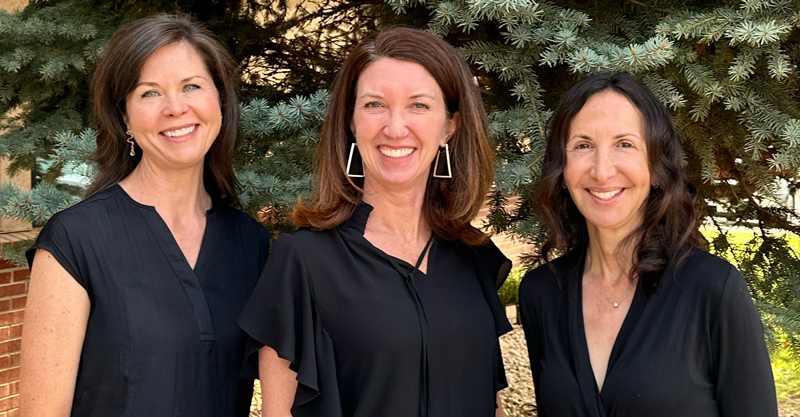
At Kaufman Health and Hormone Center, our team—Dr. Karen Kaufman, Dr. Allison Crane, and Gia McCloskey-Jurevich, NP—has spent nearly a decade helping women in our community understand their hormones and reclaim their vitality. If your skin has been trying to tell you something, we’d love to help you listen. Book a consultation and let’s look at the full picture together.
Frequently asked questions
How long do menopause skin changes last?
The most rapid changes occur in the first five years after menopause, when estrogen is lowest and collagen loss peaks. After that, collagen declines more slowly—about 2% per year. With good skincare and, when appropriate, hormonal support, you can significantly slow and soften these changes.
Can hormone replacement therapy improve my skin?
For many women, yes. Estrogen supports collagen and moisture, so systemic or topical estrogen therapy can improve dryness, texture, and firmness. Whether it’s right for you depends on your full health history, which is why this decision should always be made with a qualified physician.
Is menopausal acne treated differently than teenage acne?
Often, yes. Menopausal breakouts are driven by shifting hormone ratios rather than excess oil, so aggressive drying treatments can backfire and worsen dryness. A functional approach looks at the underlying hormonal balance rather than just treating the surface.
Do I need a dermatologist or a functional medicine physician?
It depends on your goals. A dermatologist is ideal for surface-level skin conditions and procedures. A functional medicine physician is the better choice if you suspect your skin changes are part of a broader hormonal shift and you want to address the root cause.
Author bio Kaufman Health and Hormone Center is home to a dedicated team of functional medicine providers in Louisville, Colorado: Dr. Karen Kaufman, MD (founder and medical director for MIORA at Life Time), Dr. Allison Crane, MD, and Gia McCloskey-Jurevich, NP. Together, they have spent nearly a decade helping women in their community understand their hormones and optimize their health through personalized, root-cause care.